
Nobody wakes up excited to replace their gutters. It's not a kitchen remodel or a new deck — it's not the kind of project you brag about at a barbecue. But here's the reality that catches a lot of Texas homeowners off guard: ignoring a gutter system that's past its prime is one of the most expensive mistakes you can make. The damage doesn't announce itself with flashing lights. It creeps — through your fascia, into your foundation, behind your siding — and by the time it becomes obvious, you're dealing with repair bills that make a new gutter system look like a bargain. This guide walks you through how to know when your gutters are done, whether repair or replacement makes more sense for your situation, and exactly what to expect if you pull the trigger on a full replacement.
Eight Warning Signs Your Gutters Are Past the Point of Repair
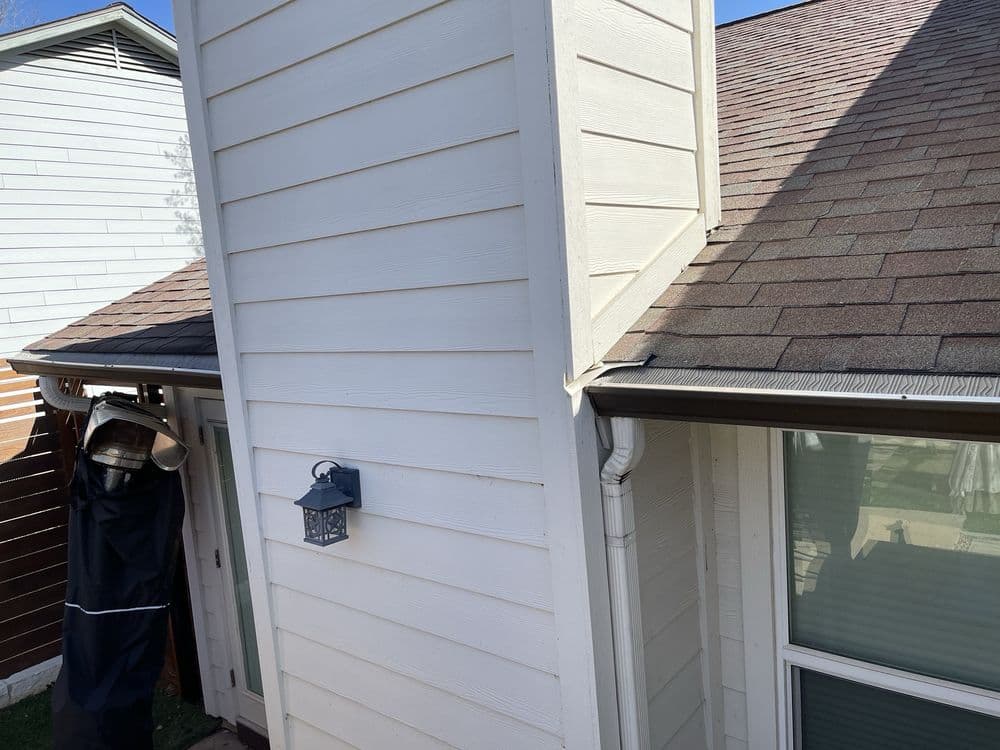
Most gutter failures don't happen overnight. They build gradually, and the signs are there if you know what to look for. Here are the red flags that tell you it's time for a serious conversation about replacement rather than another patch job.
1. Cracks, splits, or holes in the troughs. A single small crack can be sealed. A half-dozen cracks across multiple sections tells you the metal has fatigued. Aluminum weakens from years of thermal cycling — expanding in triple-digit Texas summers, contracting during winter cold snaps — and eventually the material itself becomes brittle. Patching a system riddled with hairline fractures is like putting band-aids on a sinking boat.
2. Rust and corrosion spots. If you have galvanized steel gutters, rust is a death sentence. Once the protective coating erodes and raw steel starts oxidizing, the process accelerates from that point forward. Even aluminum gutters can develop corrosion around hardware points and at joints where dissimilar metals meet. Widespread discoloration and flaking on the exterior surface means the finish is failing system-wide.
3. Gutters pulling away from the fascia. When gutters separate from the house, it usually means the fascia behind them has softened from moisture damage, the hangers or spikes have loosened from repeated expansion and contraction, or the system has become too heavy with trapped debris and standing water. You can re-secure them, but if the fascia is compromised, the brackets will pull loose again within a season.
4. Persistent sagging even after hanger replacement. A sag in one spot is a repair. Sagging in multiple locations after you've already had hangers replaced indicates a systemic issue — the pitch has shifted, the metal has warped, or the mounting surface can no longer hold the weight. Throwing more hardware at the problem is money down the drain.
5. Water pooling beside your foundation after every rain. If you're seeing puddles, erosion channels, or saturated soil near your foundation despite having gutters, your system isn't managing water effectively. This is the warning sign with the highest stakes. Foundation repairs in Texas routinely run $8,000 to $15,000 or more, depending on the extent of the damage. A gutter system that's failing to direct water away from the house is actively contributing to that kind of bill.
6. Peeling paint or staining on your fascia and soffits. Water running behind or overflowing from failing gutters leaves marks. If you see streaks, discoloration, bubbling paint, or green algae growth along your roofline trim, water has been sitting where it shouldn't for a while. That's more than an appearance issue — it's rot in progress.
7. Visible mold or mildew on exterior walls near the roofline. Mold growth on the outside of your home below the gutters is a clear indicator of chronic overflow or leaking. In Southeast Texas, where humidity stays high for months at a stretch, that moisture doesn't dry out between storms. It feeds ongoing fungal growth that can migrate into wall cavities.
8. Your gutters are more than 20 years old. Even well-maintained aluminum gutters start showing their age after two decades. The finish dulls and loses UV protection, seams loosen from years of thermal movement, and the overall structural rigidity of the troughs diminishes. If your system was installed before you moved in and you're not sure of its age, assume it's older than it looks. Building standards and materials have improved significantly — a modern seamless system will outperform anything installed in the early 2000s.
If three or more of these signs describe your gutters, replacement is almost certainly the smarter financial decision compared to continued repairs.
Repair vs. Replace: How to Make the Right Call
This is the question we hear more than any other, and the honest answer depends on a few specific factors. Here's how to think through it clearly.
Lean toward repair when: - The issue is isolated to one or two sections of an otherwise sound system - Your gutters are less than 15 years old and the overall finish and structure are intact - The problem is a single loose hanger, a minor leak at one seam, or a blocked downspout - Your fascia behind the gutters is solid and undamaged
Lean toward replacement when: - Problems are showing up in multiple locations across the system - You've had repairs done more than once in the past two years and issues keep returning - The gutters are sectional (pieced together from shorter lengths) with failing connectors - Fascia damage is present behind the gutters — this means moisture has been getting through - Your system is 20 or more years old, regardless of how it looks from the ground - You're already spending $300 to $500 annually on repairs and cleaning for a system that still underperforms
Here's a simple math exercise that helps clarify the decision. Add up what you've spent on gutter repairs and damage mitigation over the last three years. Then get a quote for full replacement. If your three-year repair costs exceed 40 percent of the replacement cost, you're better off starting fresh. You'll get a system with a longer remaining lifespan, better performance, improved curb appeal, and you'll stop the cycle of reactive spending.
One more factor people overlook: insurance. Water damage caused by demonstrably neglected gutters can be excluded from homeowner's insurance claims. If an adjuster determines that gutter failure was foreseeable and unaddressed, your claim for foundation, interior, or landscaping damage may be denied. A functioning gutter system isn't just home maintenance — it's risk management.
What Happens on Replacement Day: The Full Process
If you've never been through a gutter replacement, not knowing what to expect can make the decision feel bigger than it needs to be. Here's a step-by-step walkthrough of how the process unfolds from the moment the crew arrives.
Step 1: Old System Removal
The crew starts by carefully removing every component of your existing gutter system — troughs, end caps, downspouts, hangers, brackets, and all hardware. "Carefully" is the operative word here. Ripping out old gutters aggressively can gouge fascia boards, crack soffits, or pull out chunks of wood that make the mounting surface worse. Experienced crews work methodically, section by section, minimizing collateral damage.
All removed material is collected, loaded, and disposed of responsibly. You won't have a pile of old metal sitting in your driveway.
Step 2: Fascia Inspection and Repair
With the old gutters off, the fascia boards are fully exposed — often for the first time in years or decades. This is the most critical inspection point in the entire process. Every linear foot of fascia gets checked for soft spots, moisture damage, delamination, fungal growth, and structural integrity. Paint can hide significant rot underneath, so visual inspection alone isn't enough; the wood needs to be probed.
Any compromised fascia sections are replaced with new treated or composite lumber before the new gutters go up. Skipping this step is the single most common cause of premature failure on replacement installations. New gutters mounted on rotting fascia will sag and pull away within a year or two, putting you right back where you started.
Step 3: On-Site Fabrication
Here's where it gets interesting. A portable forming machine — essentially a specialized trailer packed with precision rollers — is set up on-site. Flat aluminum coil stock, pre-finished in your chosen color, is fed through the machine and emerges as a perfectly shaped gutter profile cut to the exact length of each roofline section. No joints. No connectors. No seams anywhere except at corners and downspout outlets.
Watching raw aluminum coil transform into a finished gutter channel in real time is actually pretty satisfying. Each piece is custom-made for your specific home — not a stock length trimmed to fit.
Step 4: Installation and Pitch Setting
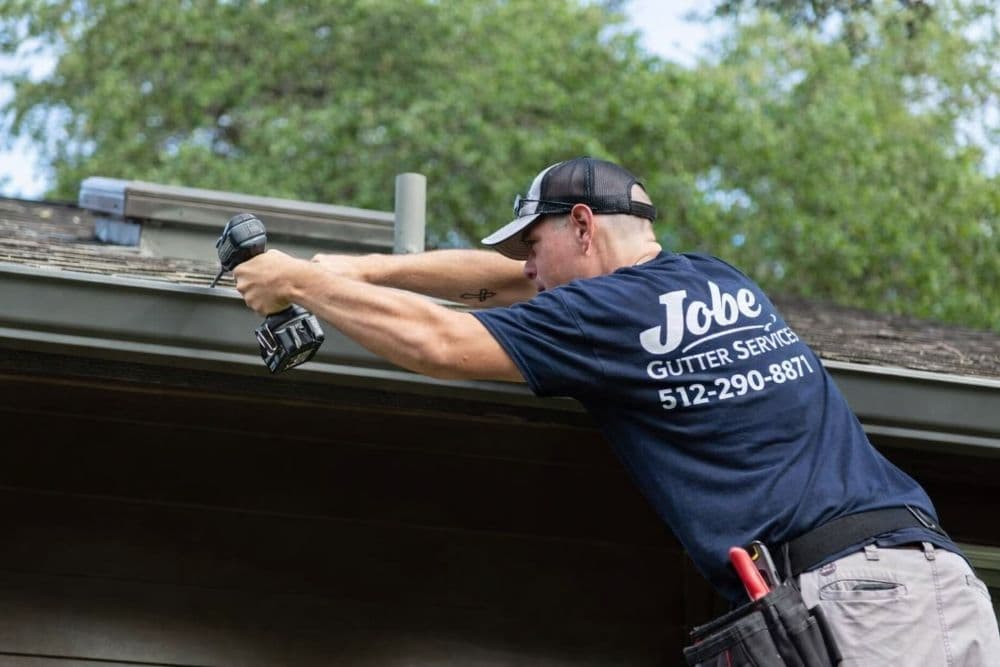
Each fabricated section is carried into position and mounted using hidden hangers — internal brackets that screw into the fascia and clip inside the gutter, completely invisible from ground level. Hanger spacing is critical: typically every 18 to 24 inches to prevent sagging under the weight of water during heavy storms. In areas of your roofline that handle higher water volume (where multiple roof planes converge, for instance), hangers may be spaced even closer.
Pitch angle is set to direct water toward the nearest downspout — generally about a quarter-inch of drop per ten feet of run. Too little slope and water pools. Too much and water races past the downspout opening during heavy flow. Getting this right is one of the differences between a system that works perfectly and one that causes problems from day one.
Step 5: Downspout Routing and Connections
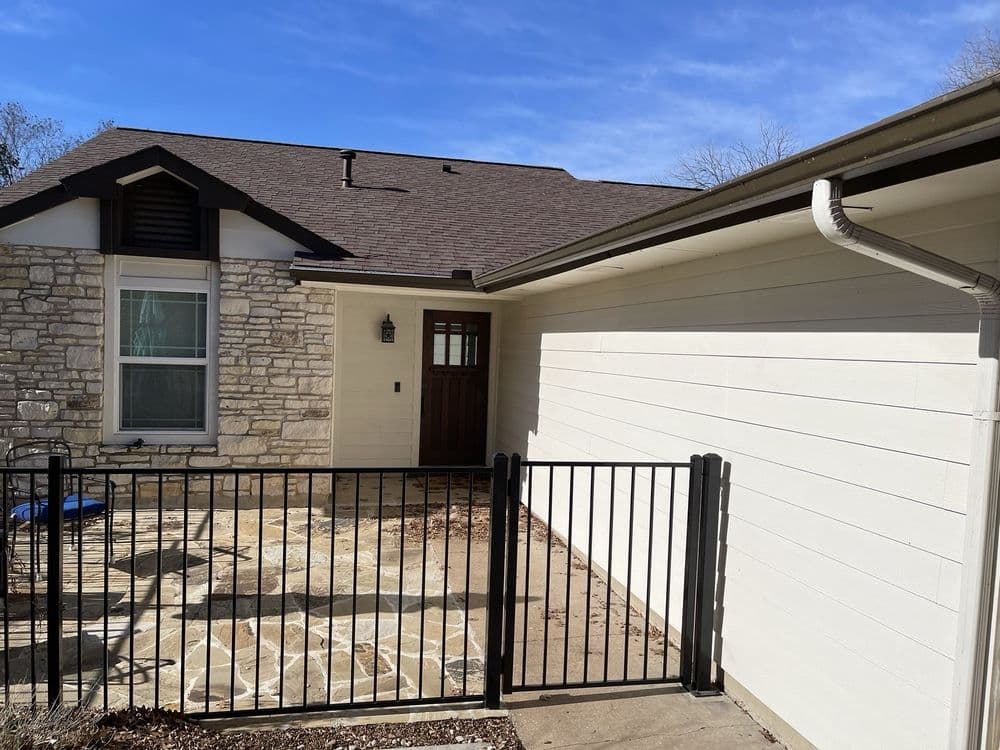
Downspouts are connected to the gutter outlets, secured to the wall with straps, and routed to discharge water well away from your foundation. Proper downspout placement is just as important as the gutters themselves — water needs to exit the system at locations where it can flow safely away from the house without creating erosion, pooling, or soggy areas in your yard.
For homes where directing water away from the foundation is challenging due to grading or landscaping, extensions or underground drain lines may be recommended.
Step 6: Water Testing and Final Inspection
Before the crew packs up, the entire system gets tested with a running hose. Every section is checked for proper flow, confirming that water moves smoothly toward the downspouts without pooling, overflowing, or leaking at any joint. Downspouts are verified to drain freely from top to bottom. Corner seams and end caps are inspected for any sign of seepage.
The property is cleaned up, debris is hauled away, and you get a walkthrough of the completed installation. Most full replacements on a standard single-story home are completed in a single day.
Material Options: What You're Choosing Between
Standard residential gutter replacement uses .027-inch aluminum with a baked-on enamel finish. This gauge handles normal conditions well and is the most cost-effective option. For homes with longer runs, higher water volume, or areas where ladders frequently contact the gutters during maintenance, .032-inch heavy-duty aluminum provides noticeably more rigidity and dent resistance.
Profile size matters too. The standard 5-inch K-style gutter handles most residential rooflines. But for homes in Houston, Galveston, or other high-rainfall areas — or homes with large or steeply pitched roofs — upgrading to a 6-inch profile with oversized 3x4 downspouts gives substantially more capacity during the intense storms Texas is known for.
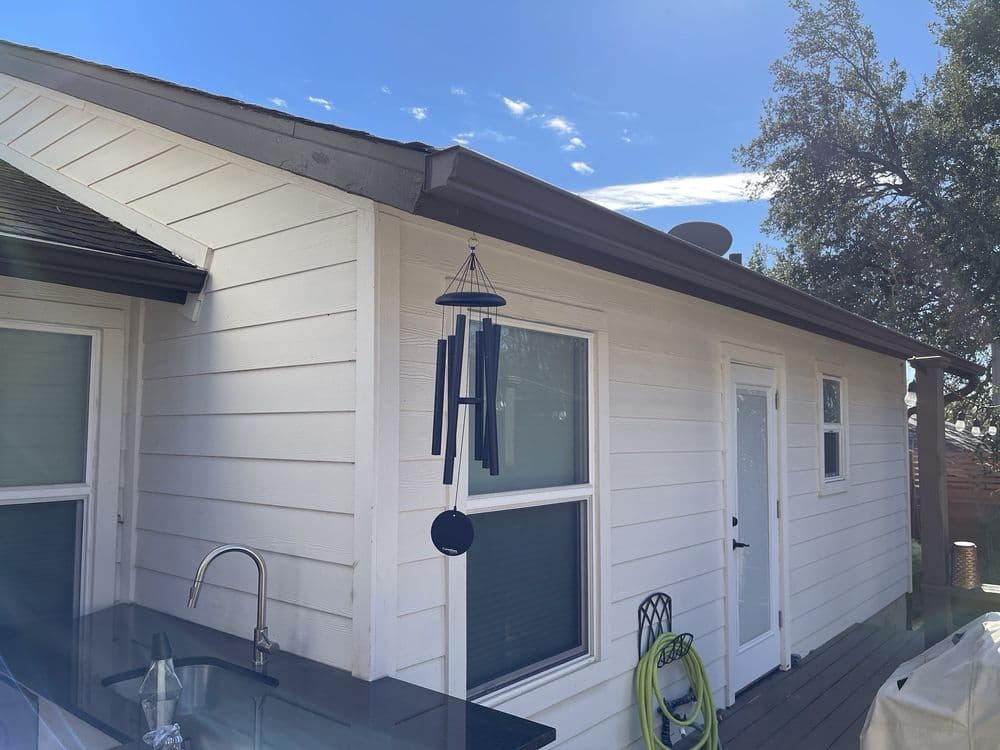
Color selection has expanded dramatically. Modern coil stock comes in dozens of factory-applied enamel colors — from classic white and almond to charcoal, matte black, dark bronze, and forest green. That factory finish resists fading, chalking, and peeling far longer than aftermarket paint. Matching your gutters to your trim or roofline creates a cohesive look that elevates your home's curb appeal — one of those quiet upgrades that buyers and appraisers notice.
The Cost Question: What Drives the Price
Transparency matters, so here's what factors into a replacement quote:
- Linear footage — the total length of gutter being installed is the primary driver - Roof complexity — more corners, angles, levels, and transitions mean more fabrication time and material - Downspout count and routing — more downspouts or complex routing adds to the scope - Fascia repairs — damaged fascia that needs replacement before new gutters can mount - Height and access — two-story homes or difficult access points require additional labor - Gauge and profile upgrades — heavier aluminum or larger profiles carry a material premium
For a typical single-story Texas home, a full seamless aluminum replacement generally runs between $1,500 and $4,000 depending on these variables. Multi-story homes or complex rooflines will be higher.
That number needs context, though. Compare it against what chronic gutter failure actually costs: foundation repair ($8,000 to $15,000+), fascia and soffit replacement ($1,000 to $3,000), exterior painting to address water damage ($2,000 to $5,000), mold remediation ($2,000 to $6,000), and landscaping restoration ($500 to $2,000). A single foundation crack caused by poor drainage can cost more to fix than the entire gutter replacement. The math isn't close.
Stop Patching and Start Protecting
If you've recognized your gutters in the warning signs above, or if you're tired of spending money on repairs that don't last, a full replacement is the move that ends the cycle. You get a modern seamless system built specifically for your home, mounted on solid fascia, pitched correctly, and tested before the crew leaves your property. It protects your foundation, preserves your exterior, and looks sharp doing it — for the next 20 to 30 years.
Jobe Gutter Services has been replacing failing gutter systems across Angleton, Lake Jackson, Clute, Freeport, Galveston, Houston, and all of Brazoria County for over 15 years. We inspect every inch of fascia, fabricate custom seamless gutters on-site, and stand behind every installation. Call (979) 201-1577 today for a free evaluation — and find out what it takes to give your home the drainage system it deserves.