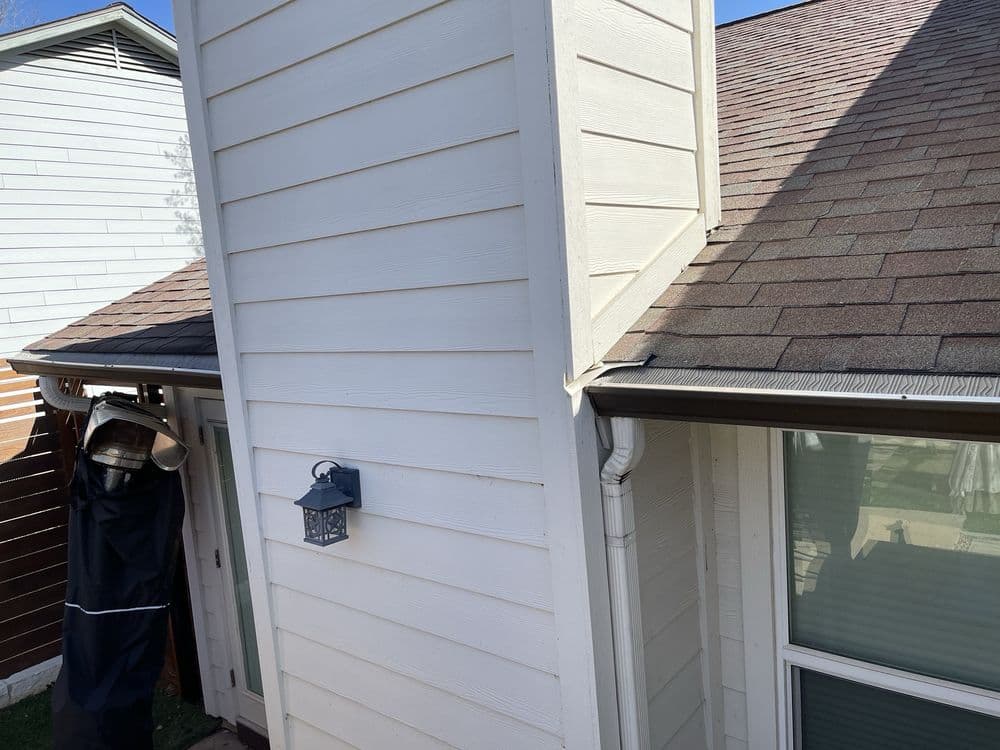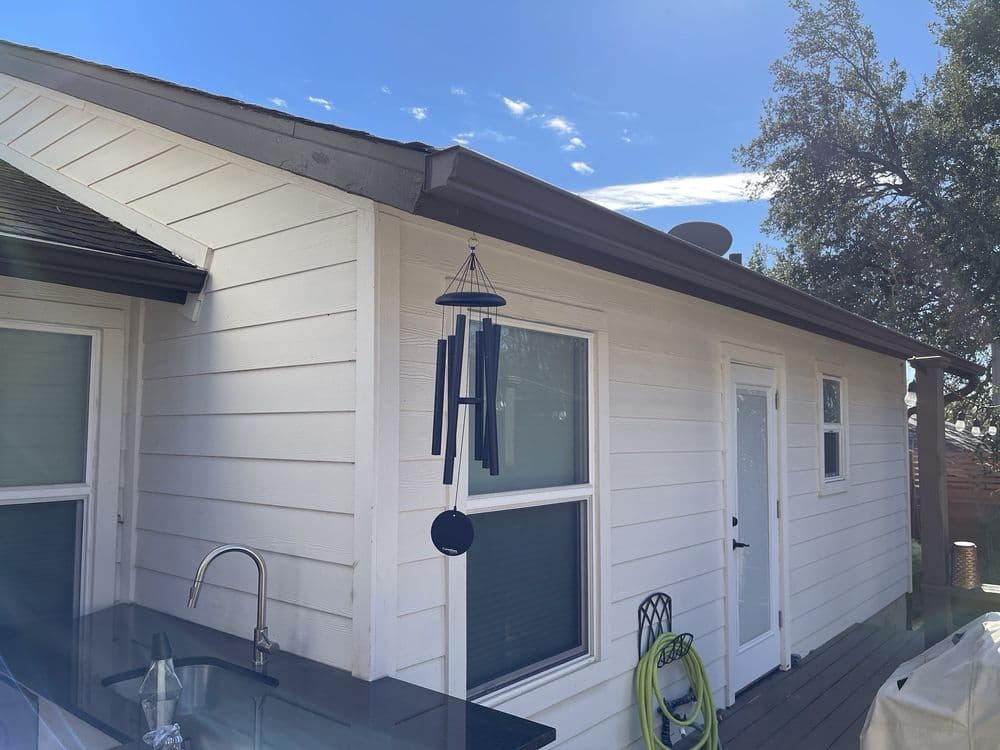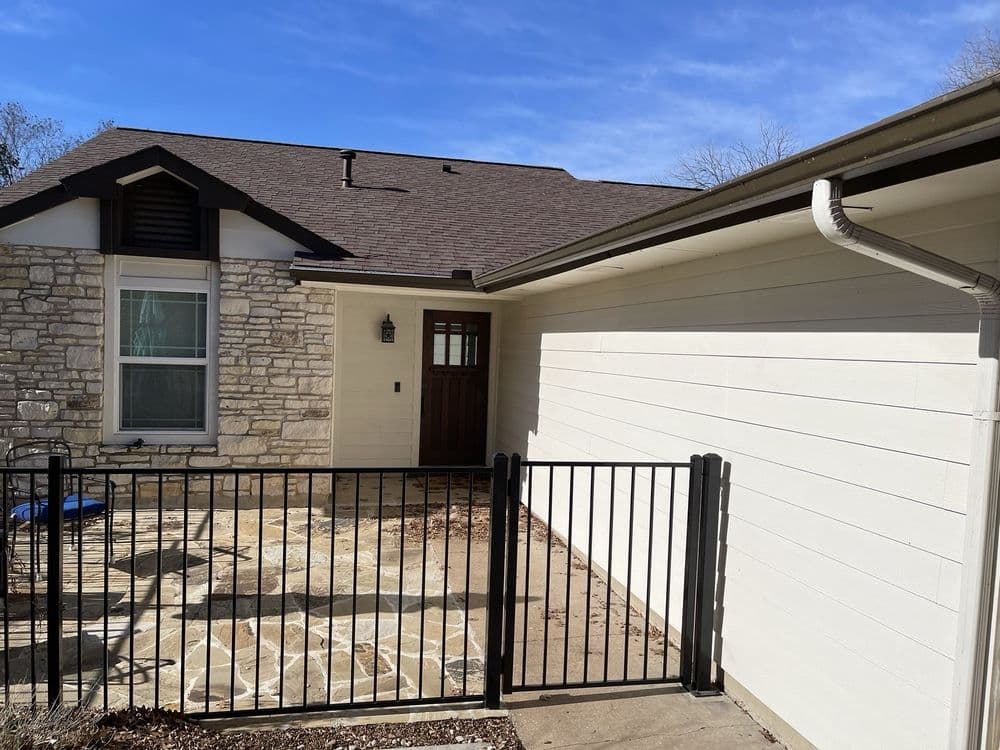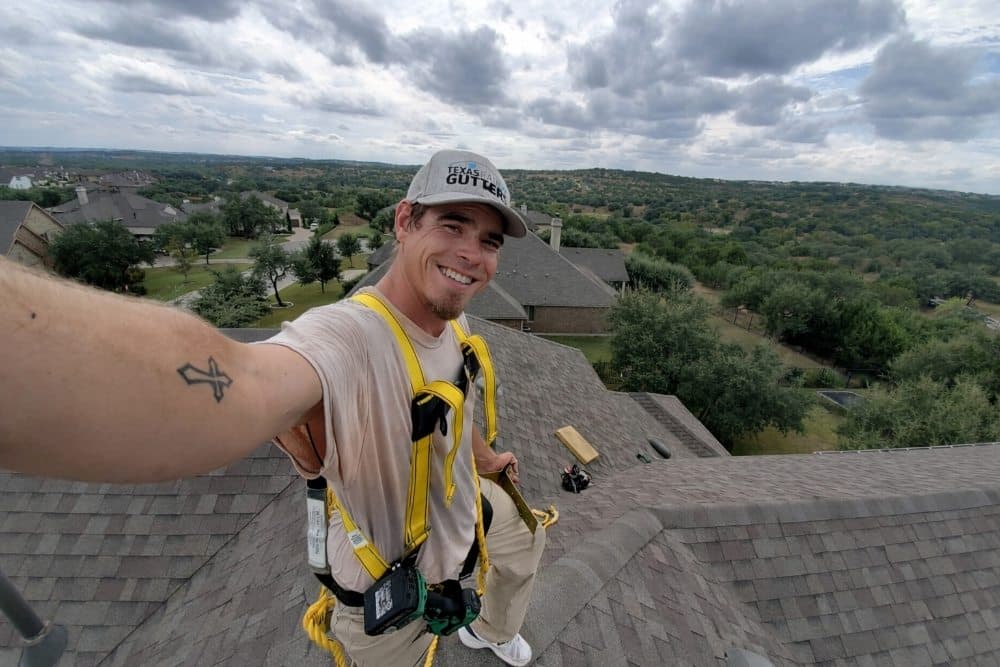
If you own a home in Brazoria County, you already know that Gulf Coast storms are not like the weather events that make it into textbook diagrams. Tropical systems can drop a foot of rain in a single afternoon. Spring squalls arrive without much warning and leave just as fast. Hurricane outer rainbands push wind-driven water under eaves and into every seam on your roofline. And for the average homeowner, the place where all of this energy first meets the house is the gutter system — which is exactly why gutters fail more often in Angleton, Lake Jackson, Clute, Freeport, and the surrounding communities than they do in drier, calmer parts of Texas.
Understanding how storms actually damage a gutter system helps you spot problems early, budget for maintenance realistically, and make smart choices when it is time to install or replace. This is a field guide to what we see on Brazoria County homes after major weather events — and what you can do to get ahead of it.
Why the Gulf Coast Is Harder on Gutters Than Most Places
The National Weather Service office in Houston/Galveston records Brazoria County rainfall at roughly 50 inches per year, but the annual total hides what actually matters: intensity. It is not uncommon for Angleton and Lake Jackson to see 2 to 4 inches of rain per hour during the worst part of a thunderstorm, and tropical systems can sustain that kind of rate for many hours in a row. Standard 5-inch K-style gutters are rated for roughly 1.2 gallons of water per second on a typical residential roofline. Math it out, and a heavy Gulf Coast thunderstorm can push a system right up to — and past — its designed capacity.
Add persistent humidity that rarely drops below 60 percent, salt-laden air that drifts inland from Freeport and Surfside, and the occasional full-blown hurricane, and you have a combination of stressors that gutter systems in Central Texas or the Panhandle simply never encounter. Materials that are fine in those climates fail early here. Installation shortcuts that hold up in calmer weather tear apart in a named storm.
The Five Ways Storms Actually Damage Your Gutters
After 15 years working on Brazoria County homes, we see the same failure patterns show up after every significant weather event. Knowing them helps you inspect your own system intelligently.
1. Hangers Pull Loose Under Wind Load
The most common storm-related gutter failure is not dramatic — it is quiet and progressive. High winds create lift under and around the gutter trough, and older installations that use spike-and-ferrule hardware simply cannot hold up. Every gust works the spikes a little looser. Over time, sections sag. Eventually a whole run pulls away from the fascia board.
Modern hidden hanger brackets, properly spaced at 24 inches or tighter for coastal installations, hold dramatically more load. If your home still has the original spike-and-ferrule hardware from a 1990s or early-2000s build, that is one of the first things that should be upgraded before the next hurricane season.
2. Clogs Turn Into Catastrophes
A gutter that is half-full of live oak catkins, pecan leaves, and shingle grit during normal weather becomes a weaponized water cannon during a tropical downpour. Water cannot escape through the downspout fast enough. It backs up, overflows the edges, and does one of three things — all bad.
It pours directly down the exterior wall, saturating siding and fascia. It sheets back under the roof edge, soaking the sheathing and working toward the attic. Or it dumps straight to the ground at the foundation line, saturating the expansive Brazoria County clay that has already been accused of enough crimes against slab foundations in this county.
Every storm-season overflow event accelerates damage somewhere you cannot see yet. This is why we recommend a pre-hurricane-season cleaning in late April or May, every year, without exception, for every home with significant tree cover.
3. Seams and End Caps Fail
Sectional gutters — the kind sold in pre-cut lengths and assembled on-site — have a seam every ten feet. Every seam is a potential failure point. Caulk that looked fine last year cracks under UV exposure, heat cycling, and the steady mechanical stress of thermal expansion. Then a tropical system hits, water pressure spikes, and every weak seam opens up.
Seamless gutters — fabricated on-site from a single continuous piece of aluminum — eliminate this category of failure almost entirely. The only seams are at inside and outside corners and at end caps, and a properly installed system uses polyurethane sealant that holds up to coastal weather far better than the silicone caulk you find at big-box stores.
4. Downspouts Get Overwhelmed or Disconnected
A 3-inch round downspout can only discharge so much water before it chokes. During a high-intensity Gulf Coast storm, an undersized downspout creates a traffic jam that sends water back up the gutter and over the edge. For larger roofs — especially the long rooflines common on Brazoria rural and ranch-style homes — 3x4 rectangular downspouts provide about 40 percent more capacity and dramatically reduce storm overflow.
Downspouts also come loose in wind. If a downspout separates from its gutter or from a subsequent section, water pours out wherever the break occurs — often directly against the house or onto landscaping that gets washed away in the process. After any major storm, a five-minute walk around the house checking every downspout connection is time well spent.
5. Debris Impact Dents and Deforms
Tropical systems throw things. Branches, palm fronds, patio furniture that was not tied down, roofing material from somewhere else — all of it gets airborne in a hurricane or strong tropical storm and some of it lands on your roof. Hail in spring squalls adds another source of dents. Every dent is a potential low spot where water pools; every deep dent can crack the baked enamel finish and start a slow corrosion problem.
After a major storm, walk the perimeter of the house and look up at the gutter line. If you see visible dents, crushed sections, or areas where the gutter no longer runs straight, those sections need professional evaluation.
What to Do Right After a Major Storm
The first 48 hours after a significant Gulf Coast weather event are when you can catch gutter problems before they turn into roof and foundation problems. Here is the checklist we give our customers:
- Walk the perimeter. Look for visible sagging, separation from the fascia, dents, or downspouts that have pulled loose. - Check the downspout discharge points. Is water actually reaching the splash block or extension, or has a section broken somewhere along the way? - Look for overflow staining. Stripes on the siding below the gutter line are a sign that the system was overwhelmed — either by a clog or by genuinely insufficient capacity. - Inspect the fascia. Any area where the gutter has pulled away exposes the fascia to water. If you see dark staining or softness in the wood, flag it for repair. - Check inside the attic (if you can access it safely). Water staining on the sheathing near the eaves often indicates that gutter overflow worked its way back under the roof edge.
If you find problems, get them on a repair list quickly. Small gutter issues compound fast in Brazoria County humidity.
Pre-Season Preparation Is the Best Defense
We say this every year because it is true every year: the single best investment you can make in your gutter system is a pre-hurricane-season inspection and cleaning in late April or May. This is the window when Atlantic hurricane season is still several weeks away, spring storms have finished dumping their debris load, and your system can be fully checked, cleaned, sealed, and reinforced before it really gets tested.
A complete pre-season service on a Brazoria County home typically includes hand-scooping every inch of the gutter trough, flushing every downspout, checking every hidden hanger and spike, re-sealing any compromised seams with polyurethane sealant, replacing deteriorated hardware with modern hidden hangers, and documenting any areas where capacity or routing should be upgraded. The cost is a fraction of what any significant storm repair would run.
When to Consider a Full System Upgrade
Some homes reach a point where incremental repair stops making sense. If your gutter system is more than 20 years old, has spike-and-ferrule hardware, includes multiple seam repairs, or has sagging sections that keep coming back after adjustment, the honest answer is usually that a full seamless replacement will cost less over the next decade than continued patching.
A modern seamless aluminum system with 6-inch troughs, 3x4 downspouts, hidden hangers on 24-inch centers, and stainless steel fasteners is engineered for exactly the kind of weather Brazoria County produces. It handles hurricane outer rainbands, routine tropical system rainfall, spring squalls, and everyday thunderstorms without approaching its limits. That margin is what protects your foundation, siding, fascia, and attic from water damage that would otherwise show up as five-figure repair bills down the line.
Get Your Gutters Ready for Storm Season
Jobe Gutter Services has been helping Angleton, Lake Jackson, Clute, Freeport, West Columbia, Brazoria, Sweeny, Galveston, and Houston homeowners weather Gulf Coast storms for over 15 years. We provide free pre-season inspections, storm damage assessments, and full seamless replacement quotes throughout Brazoria County. Call (979) 201-1577 to schedule — the sooner before the next storm, the better.